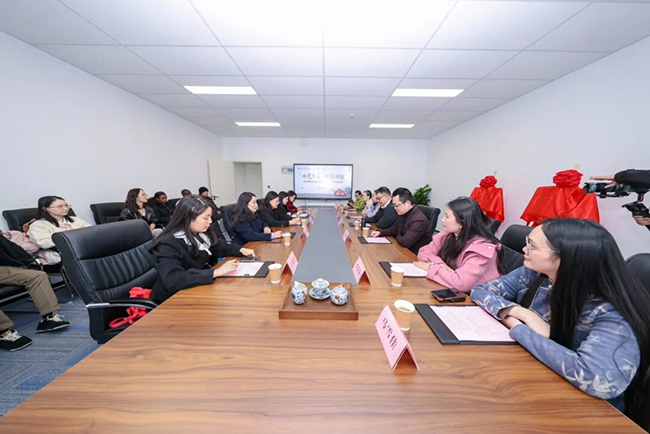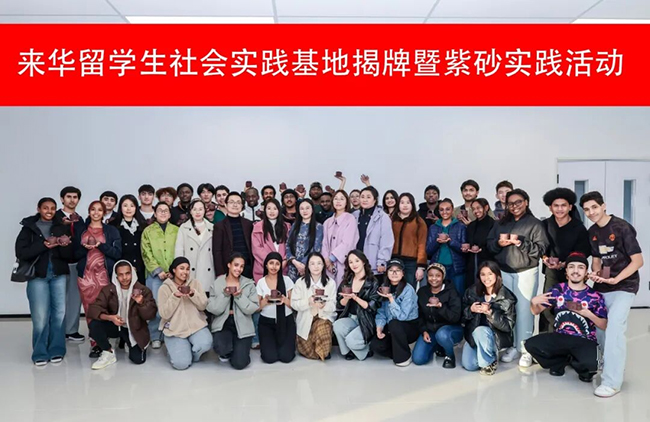
On the afternoon of November 26, the Entrepreneurship and Innovation Building at Nanjing University of Industry Technology was filled with distinguished guests in a solemn yet warm atmosphere. The unveiling ceremony for the international students' practice education base, themed "Intangible Cultural Heritage Inheritance, Entrepreneurship and Innovation Empowerment," together with a zisha pottery practice activity, was held here with great ceremony. Wei Ping, a member of the Party Committee Standing Committee and Vice President of the university, responsible officials from the International Education College, zisha pottery expert Zhang Xuefeng from Yixing Sanbei Tea Culture and Art Co., Ltd., and other guests attended together with faculty and student representatives.
Wei Ping delivered a speech at the unveiling ceremony. She emphasized that zisha pottery, as an important component of China's intangible cultural heritage, embodies not only the wisdom of craftsmanship accumulated over thousands of years but also carries the Chinese nation's unique aesthetic pursuits and philosophical connotations. She noted that the teapot's artistic principle that "square forms are not limited to one pattern, round forms are not confined to one style" profoundly reflects the traditional Chinese concept of harmony between humanity and nature, as well as the practical spirit of "investigating things to extend knowledge." The establishment of this base represents an important measure by the university to promote the creative transformation and innovative development of fine traditional Chinese culture. It aims to guide international students through immersive practice in intangible cultural heritage projects such as zisha pottery, helping them understand the deep logic of Chinese culture through hands-on experience and stimulating cross-cultural innovation potential through creative practice, thereby laying a cultural foundation for cultivating high-quality talent with humanistic sensibilities and international perspectives.
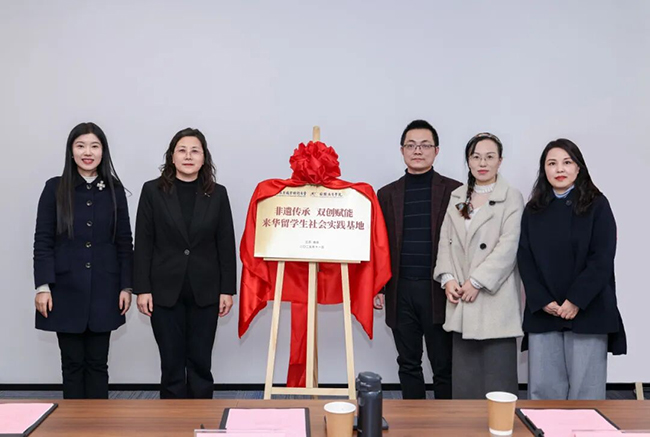
Subsequently, Wei Ping and Zhang Xuefeng jointly unveiled the "Intangible Cultural Heritage Inheritance, Entrepreneurship and Innovation Empowerment" International Students' Practice Education Base, marking a substantive step forward in the university-local collaboration in intangible cultural heritage inheritance and the integration of entrepreneurship and innovation.
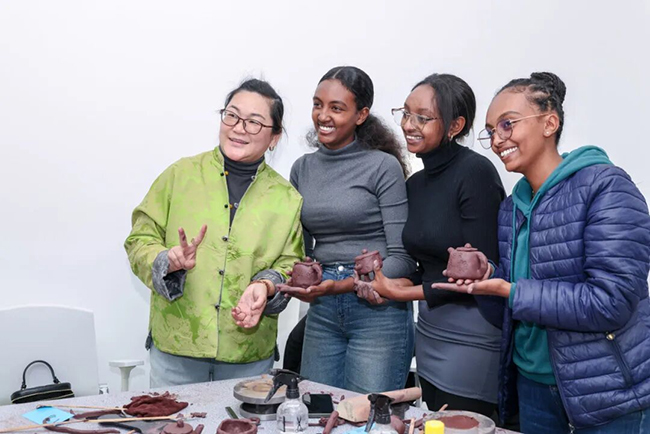
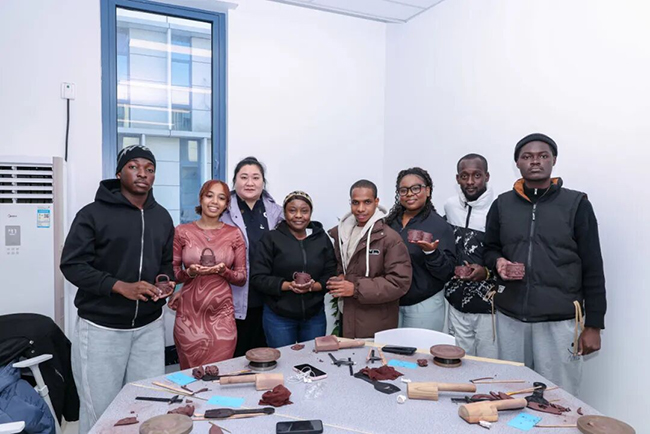
During the zisha pottery practice session, international students tried kneading clay, throwing on the wheel, and carving patterns under the hands-on guidance of master potters. Pieces of purple clay slowly turned and took shape between their fingertips, as if infused with breath and life. Each finished piece carried an aesthetic blending Chinese and foreign elements, becoming a silent yet vivid medium of cultural exchange. Emily, an international student from Ethiopia, held up her cup carved with a coffee bean pattern and said happily, "Look, I carved the coffee beans from my homeland on this zisha cup. What I'm drinking is not just tea, but the taste of two ways of life coming together."
Nearby, the tea art area was filled with a subtle fragrance of tea. Tomi, an international student from Uzbekistan, exclaimed with delight after receiving her teacup: "Savoring this Yixing black tea instantly reminds me of drinking hot tea from porcelain bowls back home. Though the teas are different, the warmth and hospitality conveyed through the vessels are so similar." The international students quietly savored the artistic conception of "harmony, respect, purity, and tranquility" in Chinese tea ceremony while tasting tea, and from this touched upon the etiquette and state of mind in everyday Chinese life.
This event was not merely a demonstration of intangible cultural heritage skills, but also a profound transmission of culture and guidance of values. With zisha pottery as the medium and practice as the path, the International Education College effectively expanded the avenues for international dissemination of Chinese culture, demonstrating its active role in promoting cultural education and fostering mutual learning among civilizations.
中文原标题:一捧紫泥连世界:国际教育学院举办“非遗传承 双创赋能” 实践基地揭牌仪式暨留学生紫砂体验活动
11月26日下午,南京工业职业技术大学双创大楼内嘉宾云集,气氛庄重而热烈。以“非遗传承 双创赋能”为主题的来华留学生实践教育基地揭牌仪式暨紫砂实践活动在此隆重举行。学校党委常委、副校长魏萍,国际教育学院相关负责人、宜兴市三杯茶文化艺术有限公司陶艺专家张学锋等嘉宾与师生代表共同出席。
魏萍在揭牌仪式上致辞。她强调,紫砂陶艺作为中国非物质文化遗产的重要组成部分,不仅凝聚了千百年来工匠精神的智慧结晶,更承载着中华民族独特的审美追求与哲学内涵。她指出,紫砂壶“方非一式、圆不一相”的造型艺术,深刻体现了中国传统造物思想中“天人合一”的和谐观与“格物致知”的实践精神。此次基地的建立,是学校推动中华优秀传统文化创造性转化、创新性发展的重要举措,旨在通过紫砂等非遗项目的沉浸式实践,引导来华留学生从技艺体验中理解中国文化的深层逻辑,在动手创造中激发跨文化创新潜能,为培养具有人文情怀与国际视野的高素质人才注入文化根基。
随后,魏萍与张学锋共同为“非遗传承 双创赋能”来华留学生实践教育基地揭牌,标志着校地在非遗传承与双创融合领域迈出实质性一步。
紫砂实践课上,来华留学生在制壶师傅手把手的指导下,试着揉泥、拉坯、刻花纹。一块块紫泥在他们指尖慢慢转动、塑形,仿佛被注入了呼吸与生命。每一件成品,都带着中外交融的审美趣味,成了无声却生动的文化交流的载体。来自埃塞俄比亚的留学生艾美莉举起自己刻了咖啡豆图案的杯子,开心地说:“你看,我把我们那儿的咖啡豆刻在了紫砂杯上,喝的不只是茶,也是两种生活碰在一起的味道。”
一旁的茶艺区飘着淡淡的茶香。来自乌兹别克斯坦的留学生托米接过茶盏后惊喜地说:“品味着宜兴的红茶,瞬间让我想起了家乡用瓷碗喝热茶的场景。虽然茶不同,但那种由器皿传递的温暖和待客之道是如此相似。”来华留学生们在品茗中静静体味中国茶道“和敬清寂”的意境,也从中触摸到中国人日常生活中的礼节与心境。
本次活动不仅是一场非遗技艺的展示,更是一次深层次的文化传递与价值引领。国际教育学院以紫砂为媒,以实践为径,有效拓展了中华文化国际传播的路径,彰显了其在推动文化育人、促进文明互鉴中的积极作为。